
Weeks 1–2
Pain
Get the first steps back.
Hands-on manual therapy and, where it fits, dry needling release the calf and the tissue under the arch, starting your first visit.
What We Treat
Heel pain is usually the last stop, not the first cause. One cause-first evaluation looks up the chain, at the calf, the ankle, and how you land.
Sound Familiar?
Two or more? Then insoles were never going to be the whole answer.
Why It Happens
The plantar fascia is the tissue that ends up sore. It is rarely the tissue that started it. A calf that has been short and tight for years pulls on the heel with every step. An ankle that lost its bend makes the arch collapse to find the ground. A weak foot and a quiet hip let the load land on the same square inch all day. Then the hours you stand, and what you stand in, keep reloading it before it can settle.
Rest, ice, and orthotics take the edge off. They don’t change what is pulling, which is why heel pain returns the week you stop babying it, and why a round of PT aimed only at the foot can miss. Natalie Johnston, MPT, has 24 years and a fellowship in pain sciences, and she looks up the chain first. You have already read everything, and already tried the thing that didn’t work. That is exactly the kind of patient who does well here. Limp long enough, though, and the other hip starts keeping the receipt.
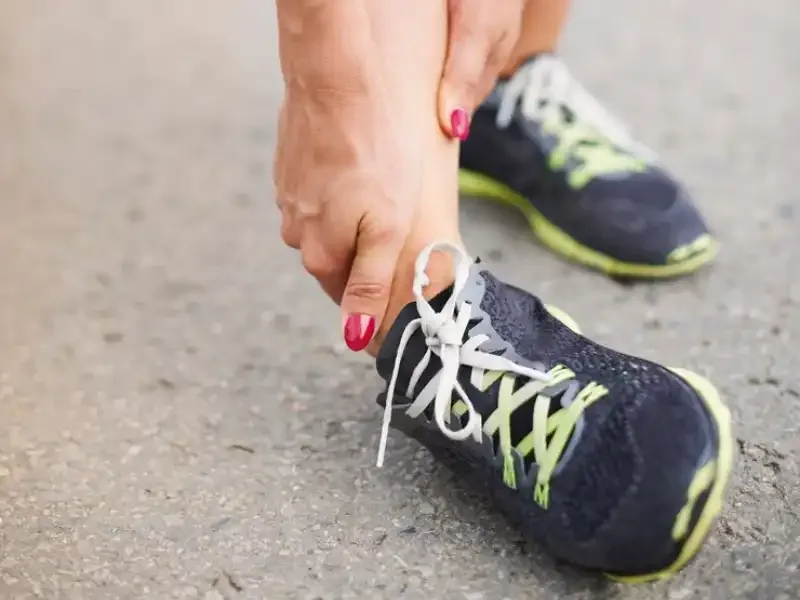
The Honest Truth
Nobody regrets starting too early. Plenty of people tell us they wish they had come in sooner.
How We Fix It
Every plan has an endpoint. Here’s what the four phases look like for heel and arch pain.
Weeks 1–2
Pain
Hands-on manual therapy and, where it fits, dry needling release the calf and the tissue under the arch, starting your first visit.
Weeks 2–6
Prime
Calf length and ankle mobility come back, so the arch stops collapsing just to reach the ground.
Weeks 6–10
Perform
Foot, calf, and hip strengthening gets loaded through walking, stairs, and single-leg work.
Weeks 10+
Prevent
Your walking pattern and shoe wear get looked at, and you leave knowing how to load a long day on your feet. That’s the endpoint.
Natalie is amazing! I went to see her initially for calf pain and received dry needling, a detailed, personalized plan and excellent follow up. We also worked on some old, chronic pains and tight areas that I’ve had for years, she took her time, worked to answer all my questions and came up with some exercises to add to my routine at home that have helped enormously. I highly recommend her!
Shared by Susan TA · She came in for calf pain, not heel pain. Same cause-first approach, one joint up the chain.
Before: you swing your legs out of bed and brace for the first three steps
After: you stand up and walk to the kitchen without thinking about your heel
Questions, Answered
Usually not, and it’s rarely the first step. Heel spurs turn up on X-rays of feet that never hurt, so an image doesn’t tell us what is pulling on yours. We start with a cause-first evaluation, one-on-one with a licensed physical therapist, and we look at the calf, the ankle, and the hip. If imaging turns out to be genuinely necessary, we’ll help you get it.
Usually not completely. Hurt doesn’t always mean harm, and total rest lets the calf and foot get weaker, which is why heel pain comes back the week you start again. The useful question is how much, in what shoes, and on what surface. A licensed physical therapist sets that at your evaluation and adjusts it as you improve, one-on-one, every visit.
A full plan for plantar fasciitis runs through all four phases, Pain, Prime, Perform, and Prevent. How long that takes depends on how long the tissue has been irritated and how much you are on your feet, so we won’t guess at a number before we’ve evaluated you. What you get either way is a plan with an endpoint. You’ll always know which phase you’re in and what’s left, instead of an open-ended string of appointments.
Book Your Visit
Request a time and a real person calls you back. No phone tree. No ‘someone will reach out.’ Just a plan.
4.9 · 79 Google reviews
Typical response: under 2 business hours
Step 1 of 5
That’s the hard part done. We’ll call during business hours to lock in your time.
Visit Us