
Spotlight Series
Spotlight Series topic : Yoga, Faith, and Women
Guest Name: Payton Foeller
Guest Credential: BSW (SIU Carbondale) 200YTT (Yoga Renew) Trauma-Informed Cert. (Centre for Healing) Somatics Cert. (My Vinyasa Practice)
Discussion Details: Join us for this great discussion where we hope to empower you as a woman navigating your way through the world grounded in your faith.
Benefit of Watching: Together we will host this conversation, explore the neuroscience behind integrating mind and body practices, help to demystify these approaches and make them more accessible—especially for women. Together, we’ll unpack how these tools can be used for healing, self-discovery, and even a deepening of faith, creating space for questions, reflection, and personal growth.
Address of guest’s business:
https://www.mendingwithmindfulness.com
Payton Foeller: Fuller.
Natalie Johnston: It’s Feller.
Payton Foeller: Feller. Payton Feller. You can say I’ll respond to whatever.
Natalie Johnston: Okay.
Payton Foeller: Some people say it Fuller, some it’s spelled Fuller, so that’s fair.
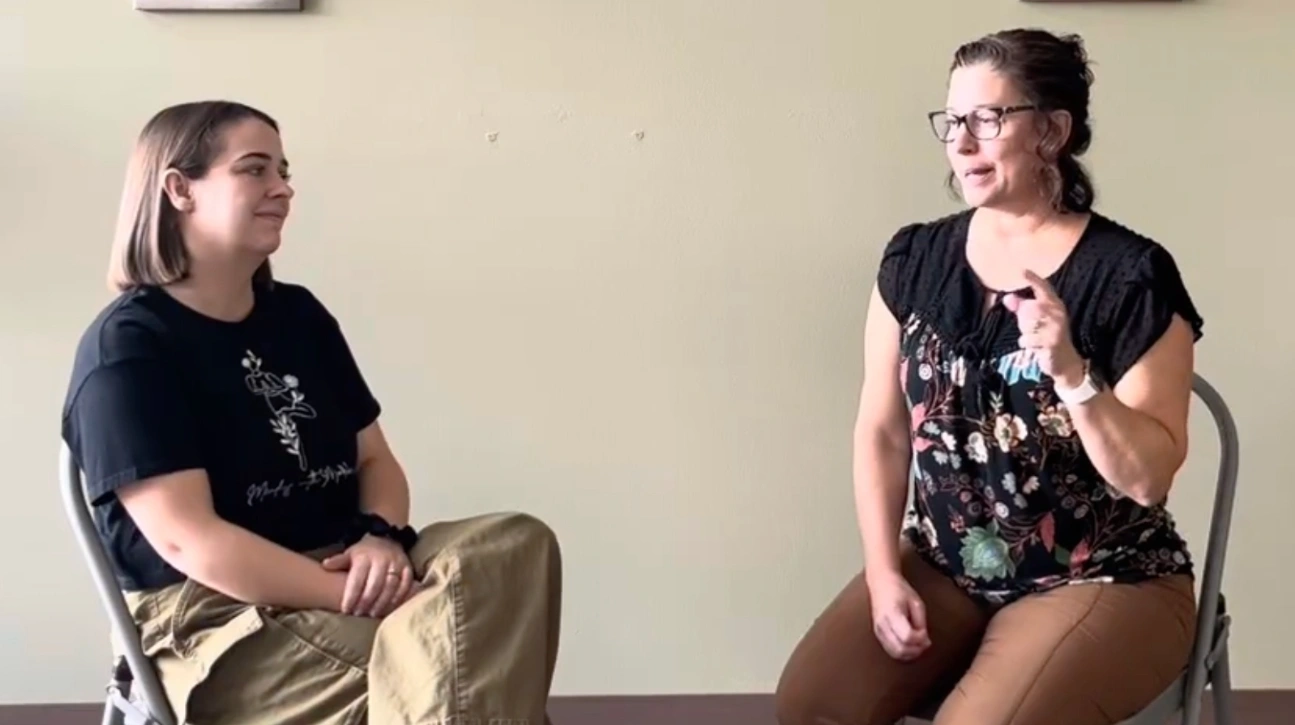
Natalie Johnston: Okay, cool. Well, thanks for joining me. And I brought Payton in because she is um her writing really caught my attention. And um I’m I’m going to kind of maybe let her describe what her business is and um briefly and um but her she is a yoga teacher bringing in the faith-based aspect with yoga. Um and um what I approached her with was this question of hey do you want to come and have a conversation at our business about um the integration of faith and yoga practice for trauma and healing and sematics and and we can get into what what we mean by that from a faith-based perspective specifically um to empower women who maybe feel like those two things cannot go together. Um, and did I say that right so far? Okay. So, let me pause. Just kind of tell us a bit about what you do u briefly, then we’ll get into our some more conversation.
Payton Foeller: So, I just started in January, so I don’t do a whole lot just yet. Um, I do short yoga series that combine sematics. So, like I’m coming from, personally, I’m coming from like a chronic pain lens. Um, trying to like heal that. And sematics has helped a ton and sematics is kind of a buzzy word.
Natalie Johnston: So yeah. So what do you mean by sematics?
Payton Foeller: Uh so we do a lot of like instead of just like think of your traditional yoga class kind of get that in your head and then I’m going to go through and then I’m going to add like instead of just sitting and stretching we’re going to do some like neuro eye exercises um some different like things that train the brain.
Natalie Johnston: Mhm.
Payton Foeller: And sematics is like I’m trying to think of like the technical definition for it.
Natalie Johnston: So I think it’s when you’re bringing in the body with the movement that that ability to tune into your own body.
Payton Foeller: Yeah.
Natalie Johnston: As you’re moving and the sensations combining those with the emotions and the brain activity.
Payton Foeller: Yeah. So it’s more of like combining all of the things which yoga does. like yoga does try to get you to tune into your body, but it nothing really clicked for me until I had that neuroscience portion like that neuroscience education of oh wait this is why yoga works and it’s that trauma informed piece bringing in the brain so yeah
Natalie Johnston: cool very interesting so um and how do people find you like what’s your business name and
Payton Foeller: it’s called Mending with Mindfulness um My the name was kind of born out of I was in therapy with one of my first counselors and she was trying to explain mindfulness to me and I was like that is the dumbest thing I have ever heard.
Natalie Johnston: Okay.
Payton Foeller: Like she was like well just like she’s like describing like walking through a room and she’s like you’re not really attached to any of the objects. You’re just noticing. Like that’s the word. And I use it all the time in my classes now which is hilarious because I was like I don’t know what that means. Like what do you mean notice? just noticing stuff and now I’m like just just notice just notice and people are like what and it just takes time like to to realize like to let that click in and like oh you mean just like note that it’s there stop getting mad about it like stop trying to fix it was a huge thing and just let it be there and then your brain will follow through send oxygens and blood cells like all of the things to wherever it is you’re like focusing on, meditating on, stretching, whatever, if you just pay attention instead of trying to intellectualize and get it out, just leave it. Just leave it alone. And it’s harder to do than it sounds. But so mending with mindfulness,
Natalie Johnston: mending with mindfulness. Is that what’s the web page? They can see all your great writing.
Payton Foeller: Uh mendingwithindness.com.
Natalie Johnston: Okay, cool. Um so with the in the context of faith and yoga. I think it’s important initially to kind of define where we’re coming from from our own individual uh faith journeys and perspectives as we define oursel as Christians. Um because unfortunately that can lead to a bunch of different interpretations. And so for the sake of this discussion and the discussion that we’ll have at our at our clinic, our lens that we’re coming at this through is using the Bible as our source of truth. and um also the belief in the gospel um and the gospel message as our um as our salvation and um the belief in that. So if you’re agreeing with that, do you want to add anything to that?
Payton Foeller: No.
Natalie Johnston: Okay, we’re right there with you.
Payton Foeller: Cool.
Natalie Johnston: And so from that perspective, we both have had different um experiences where we realized that our faith backgrounds have um really kind of pushed this um lack of awareness and appreciation for our own bodies as women. And also caused us to maybe even uh question like, wait, can can we entertain this yoga business and our faith? Um and we both through education um came up with the idea that and well it’s not an idea it’s science um that neuroscience really supports all the amazing things that happen with a traumainformed or sematic uh based yoga class that can really be empowering and healing for us as women of faith. Um and even by using the word healing I think that we’re probably opening or making a can of worms or maybe making people feel a little uncomfortable. But when when we say healing, it is from a faith-based perspective. When we’re using a neuroscience technique in a yoga class as a movement to heal the brain, we recognize that this is the brain that God gave us. And it’s it’s really amazing to learn how we can heal the brain with the power of what God has given us. And so maybe it makes me think of a story you shared about um because we hear different buzzwords that make people feel uncomfortable. Healing is one of them. They’re like, “Oh, I’m I’m getting healed. Is this from woo woo or is this from God?” No, it’s not woo woo. It’s from God and neuroscience. Um or meditation is another word because that kind of people start to get a little wigged out. So can you share the story about I think you said something you focus on something and how you spotting the the yeah the brain spotting and the healing and the amydala.
Payton Foeller: Um so brain spotting is it’s similar to EMDR. So it’s like kind of a branch off of EMDR. So EMDR you have to kind of have a story that you’re processing and working through. Brain spotting is like the theory that instead of eye movement tied to a story processing, it’s an eye position that’s tied to the amydala um where trauma is stored. And so imagine you’re having like a a trauma event or whatever. Like often you’re going to zone out on a spot like and that spot is going to sink into your brain and stick there. And so until you go back in and figure out where that where that it sounds crazy. It sounds wild. When my counselor was explaining to me, I was like, you sound like a lunatic, but I will try it. And it works. It’s nuts. And so like you just focus on that spot. You focus on the pain point. So you don’t have to have that like story to to process. And so I think so. I was doing my shoulder that that one time and um so I’m just sitting there holding this like rubber duck on my shoulder because you want to do it in like a an object that’s not your hand so your body kind of recognizes that it’s different than yourself and so you sit there and then you just stare at it and then it’s weird because you’ll kind of find like your heart rate will increase like if you find the right spot like you’ll have the the arm the hair on your arms will stand like you’ll have a bodily reaction just from finding the correct spot
Natalie Johnston: as we trigger it to your body basically.
Payton Foeller: And so then you’ll sit there and I think I sat there for like 20 to 30 minutes the first time we were doing this and you’re just staring and your eyes go like wonky and then it moves like it moved to my neck the pain the pain and then it moved to the top of my head and it sat on the top of my head for like three weeks until I we we went back we did it again and then eventually it just like kind of dissipated which I’ve heard from other people where they’re just like they’ll they’ll talk about it moving up the chakras and that’s how it comes out. It comes out in the crown. I’m not saying that that’s what happened, but it is interesting that the just the language is different. But like a yoga person would call that like moving the energy out of your crown. And I’m just like I don’t know. It’s weird. It came out of the top of my head. But yeah, it’s it’s cool. It’s creepy and weird, but it’s it works. And and it’s like then once you get into it, you’re like, “Oh, it’s just science.” It’s like it’s just the neuroscience of you processing that neuropathway in your brain. Right.
Natalie Johnston: Correct. So I have to pause you because you you said so much like in the last two minutes or however long that can be unpacked from multiple multiple angles. So um what you’re describing um through your lens can be described in multiple other lenses in terms of healing. So yours is one way, but this is exactly why I brought Payton in because she comes at it from a pain perspective and we are a clinic that specializes in chronic and complex pain treatment. And so what she’s getting at from the neuroscience western world perspective, we call pain neuroscience education. When we start to merge our yoga field with our science field, um it’s wonderful because then it makes more sense and that’s kind of what you’re getting at. So, you threw out the term EMDR. I just want to pause there. Um, that’s a a therapy tool known as eye movement desensitization therapy to help process different kinds of trauma. Um, and uh, one of the things you you mentioned focusing your eyes on something. Um, people can go for a walk and their their eye movement as they’re out in nature can help to calm the amygdala. And that’s another term you threw out. The the amydala is the part of the brain that is our fight orflight um kind of threat detector. It’s like the fire alarm in our body. And it does it does not have to be confronted with a real threat. It can be and it will react, but even a perceived threat to the brain will start to activate that threat response. Right. And so in some of what you described, you involved the eye focus and that connection with the amydala or that that threat detector in the parts of your body that were experiencing pain and how as as the process of your healing, you were able to make that connection with your own body and then see how that pain can shift. um in our pain classes we talk we unpack a lot of this too in terms of how to process through pain um and so thank you for sharing that example. I just wanted to add a little bit because I’m like you threw so much out there that I think some people have never heard of.
Payton Foeller: That’s why it’s so hard to describe it.
Natalie Johnston: Yes.
Payton Foeller: And so like you reminded me so I had a different similar experience if we want to kind of start to talk about the faith lens a little bit. And so I was having I was waking up with this pressure like in my chest for years. It’s been years. And it’s like is it anxiety? Is it low blood sugar? Is it what whatever. And so then I had one night where I was just brain spotting on it like and you know how you should do this with a therapist until you kind of get it figured out and you know what’s safe to safe to do. And then she’s like okay you know what you’re doing like if something comes up work on it. So, I was brains spotting over this spot and I’m sitting here and I’m just staring off and then I just like asked it. I was like, “Please take this out. Please take this out. I’m so tired of it.” It was gone. Like it was And that was your prayer.
Natalie Johnston: It was just gone. Yeah. Yeah. And then so then I spent a week with this just like weird void. Like if you’ve ever had chronic pain for like years and years and years at a time and then it’s gone, that’s just as weird. like it feels just as weird. And so I was out like in our in our yard sitting in our little swing in the tree and I’m just sitting there. I’m like this is so weird. And we had friends coming. We’ve had a crazy busy summer and I was just like I’m tired of feeling weird. I just want a week or two of like feeling normal. I’m like can you please just like fill this up with something good? Like fill this up with something better. And then again it was just instantly like gone. Like that weird ache is gone. And so like when I explain like the combination of faith and the science, the neuroscience and the all of the just what feels like weird and woo woo, I I also have to add the caveat of like my like bathe and my prayer life has never been better. Like I I like I think I put in one of my blog posts where I just titled it, it’s for me. Like I I was never one to like pray a ton because I was like what is it doing? Like God is sovereign. Like he’s got control. he’s going to take care of it. What? Why do I need to pitch in?
Payton Foeller: Yeah. You know, like what’s the point?
Natalie Johnston: And then I was like, “Oh, like it’s for me.” Like the meditation and the stillness and the like focusing on scripture, which is a like positive affirmation basically. Yeah. Right. Like all of those things, it’s for my brain. It’s to rewire my brain for health and like feeling better and like
Payton Foeller: Yeah.
Natalie Johnston: doing more like than sitting on the couch and being tired all the time, right? you know, it’s just it’s crazy. It’s been wild. So, and you have a remarkable story to share from that perspective, how it’s just kind of helped you function again with your three kids and all the things. I’m sure.
Payton Foeller: Yeah. Yeah.
Natalie Johnston: So, if you are a woman of faith out there or even a woman not of faith, but you’re interested h in joining us for just a conversation. Um, we want to empower you. We want to show you that God does promote healing and it’s okay to pay attention to your body as a woman. It’s okay to have these conversations. We’re not going to force anything upon you, but what we do ask is that you come and be willing to engage in a conversation. Um, and we would love to share that with you. So, check um, you can check the business Facebook page. We’re going to post on there. We don’t have the date scheduled yet, but it’s coming in the next couple months. So, check um Motion Matters Physical Therapy and Wellness Facebook page for that um information or I’ll probably put it on the YouTube um caption, too. And in the meantime, make sure you check out Payton’s amazing blog post and writing um on mendingwithindness.com.
Payton Foeller: Yeah.
Natalie Johnston: Okay. Awesome. Cool.
Payton Foeller: Cool. Well, thank you for having me.
Natalie Johnston: Yeah.