
Spotlight Series
Spotlight Series topic: Massage, Intuitive Wisdom, and related topics for Body Work
Guest Name: Ben Johnston
Guest Credential: LMT
Discussion Details: Ben shares with us his approach to body work through massage.
Benefit of Watching: In this discussion we talk about body work, lymph flow, and benefits to massage therapy.
Address of guest’s business:
1295 Jordan St #5, North Liberty, IA 52317
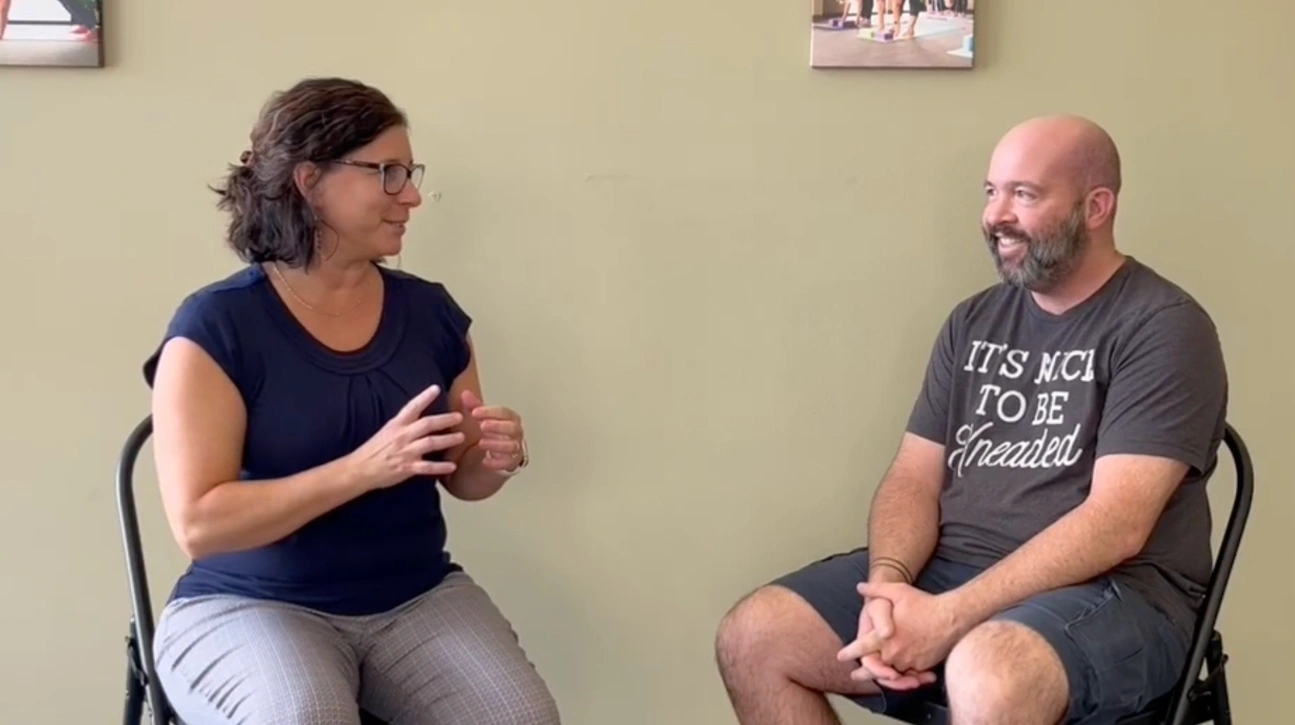
Ben Johnston: Thank you very much for uh having me and hosting this event coming up. Um so my name is Ben Johnston. I have Ben Johnston Intuitive Wisdom and I’m located at 1295 Jordan Street um in North Liberty and my website is benjintwisdom.com or benjson20203.com. a little quicker and easier to do. Um but uh so just a quick um snippet of who I am and what I do is I’ve been doing massage since 2011 and um I’ve blended sports massage with lymphatic with energy work and I have my own mindset with when it comes to how I understand how the body works.
Natalie Johnston: Okay. So, also to clarify, both our last names are Johnston with a T, but there is no relation. Not that I know of anyway. Um, okay, perfect. So, I think that I’m I’m probably not the only one who hears you say that and and wonders, okay, what does that mean? Massage work, energy work, uh, lymphatic work. How how can you how would you explain that to somebody who that that’s kind of new new words?
Ben Johnston: So mine’s a little maybe more therapeutic. It’s interactive and um so what I’ll do is I’ll assess the body. I’ll do range of motion muscle testing. We’ll fix something and then we’ll retest it and then that makes it um lets me know if it’s working in the right pattern. So then we’ll do kind of like a process of elimination so to speak. Um it’s the energy work is more intuitively intuitively guided to figure out what direction to go with. Um sports um honestly it’s it’s a new concept for me just trying to figure out how to describe it because everybody’s results are pretty phenomenal. Um but it’s just like normal for me.
Natalie Johnston: Yeah. So do you feel like you get a body in front of you and then it’s I guess that’s why it’s called intuitive wisdom. Um because is is it just like almost like you you can feel what needs to get done and and you use some visual test retest stuff to confirm for you that you’re on the right track.
Ben Johnston: Yeah. It’s um so like when when people get on the table um I do range of motion neck, shoulders, and hips. And then based upon just the way the neck feels as I move, I kind of have an idea of what muscles to release and and go with that. And then I go to the shoulders, do the same thing, release specific muscles. Mostly the tricep is the biggest one that people don’t realize how much it affects the shoulder. And then um I go down and I do a process of like muscle testing the toes. Um kind of priming the lymphatic system, see how if it’s actually flowing where it needs to. I have a friction test that I do over the sheet that lets me know about superficial blood flow and how that’s processed through um and how bands directly affect that process and then intuitively is the the reason why I got the name intuitive wisdom is actually because I have a lot of clients like hey how did you find this out so like if you’re tight on your calf here if we release your lat your calf pain goes away it’s like how did you figure that out honestly I just kind of intuitively guided to say hey let’s try this or let’s try this and then I always ask my clients hey you know does this feel better does this feel better
Natalie Johnston: so like the idea of the the traditional lymphatic system I’m really challenging what that is because the way I understand it, it doesn’t go with the same mindset. Have you That makes me think of the book Anatomy Trains. Have you read that one or looked at it?
Ben Johnston: I’ve seen it. It’s been a long time since I’ve seen it.
Natalie Johnston: Yeah, it’s Anyway, I think that has some overlapping stuff in it from from what you’re talking about too. So, let’s say um I’m a person who has let’s just use an example um a chronic pain patient. Maybe I’m hyper mobile. Um maybe just have some fibromyalgia for years to Am I the type of patient that would benefit from your services?
Ben Johnston: Absolutely. I haven’t really
Natalie Johnston: And why or why not?
Ben Johnston: Okay. I really haven’t found a limit to the benefits that people work on whether it’s like chronic conditions or acute injuries. Um so the biggest con or the biggest idea that I can express is that your body’s a fully system and if there’s something that disrupts the pressure then that’s going to affect all sorts of things. So fibromyalgia is something that is really challenging for people to understand because it’s it’s random and it’s really chaotic to a certain degree. Um and then like traditionally people that I see are typically women from 20 to 50s athletic or or not. desk or office, whatever. Um, that’s typically the people that are kind of drawn to me because they’re wanting to get better. Um, but if you have fibromyalgia and you’re looking to try to get out of pain by me assessing the full body and flushing the system and basically what I call uncanking the lymphatic system, then your body’s going to process that blood flow differently and then you’re going to have pain for longer. So traditionally people come in and within like one one or two sessions they have about two or three weeks of relief versus a traditional massage where you just lay there. This is more interactive. And when I ask people say oh you had a massage before.
Natalie Johnston: Yeah. Well how long did that massage last you?
Ben Johnston: Oh maybe a couple days couple hours. And then for when people see me it’s usually a couple weeks.
Natalie Johnston: So you see kind of this longerlasting effect.
Ben Johnston: Yes.
Natalie Johnston: And I assume people feel better with that. They tell all their friends and everybody else too.
Ben Johnston: Yeah,
Natalie Johnston: that’s awesome. Okay, so yeah, I mean whether it’s a chronic pain patient with fibro and hyper mobility or an athlete or somebody who’s sitting at their desk all day, it sounds like with our systems in our body and how how integrated all the systems are, there’s going to be benefits for each one of those types of patients.
Ben Johnston: Yeah. Whether it’s EDS, hypermobility, or any other journey that a body has been on, right?
Natalie Johnston: And I think um that we can put lots of different categories or names on things, but the reality is each body has gone through a journey to where it’s at right now. And and I’m not sure if I’m putting words in your mouth, so correct me if I’m wrong, but what I’m the sense I’m getting from listening to you is that um you take that intuitively into account when you see a body in front of you to work on. And it it’s kind of like um you’re able then to adjust with your techniques to respect that journey that the body has been on up until that point. Is that did I say it right?
Ben Johnston: Yes, that was actually a very accurate statement.
Natalie Johnston: Okay.
Ben Johnston: Um so a lot of people who come in like um trauma is stored in the body release the muscle memory and then that trauma is experienced. I have lots of stories I could share for another time. um that goes through what people experience on my table and what they feel through the process and how I basically hold them or comfort them in a way that is supportive to where they can cry it out or they can express the anger or fear or whatever it is and they have this safe place to fully express what they’re feeling. Um, and then I kind of walk them through a visualization or a process to where they can mentally challenge it and also work through it and process through it. Um, so then it gives them a sense of ownership of, okay, I had that experience and I can heal from that and I can move on. So that’s kind of what we do.
Natalie Johnston: So I love that listening to that as a clinician and um, person involved with holistic care. Um, that sounds lovely. And now I’m going to flip the lens and listen to what you said just now as a person who maybe has been through trauma. And I just got really freaked out by what you said. So the person who has been through trauma and hears what you said about ah you want me to experience my trauma in a safe place and you’re going to hold me like that evokes some fear and concern. What do you say to that person? Because I do think you can help that person. So, how do we kind of assure that person, hey, this is safe. Um, you’re going to be in control or whatever.
Ben Johnston: So, the So, for me being a male massage therapist and working predominantly with women, I have definitely really hard boundaries that I never cross. And then I also have a a way to have people express whatever they’re going to express. Traditionally, people who have emotional releases are kind of bottled up within a aspect of their energy field. Um, they they’re not reliving the same experience in the same way. They’re probably reliving an aspect of that or or the or the materialization of the experience in their body in a way. So like I’ve had a lot of people who’ve um done self harm before and then we go through a journey of you know what color is it, what shape is it, whatever it is, can you get it out of your body? Can you visualize it out of your body? And then we reassess of what color is now, what shape is it now? And we always try to elevate the energy so it’s a higher and higher frequency. So where usually something that was black or dark and red that was a ball that was really dense is now light and purple and it doesn’t even exist anymore. So it’s more of a metaphysical approach to it than an actual physicalness to it. But I’ve also had people where they’ve had a physicalness of they were went back into that emotional state and cried and that just basically e their hands on or hands off and just let them experience whatever they need to experience.
Natalie Johnston: Thank you for explaining that a little bit further because I do think that’s a real fear that a lot of people maybe have when hearing about the work that you do, especially if they’re not familiar with people who do stuff like that, right? Um and and there might be some fear in even booking an appointment even though you probably can help them quite a bit. Um and so just kind of I I appreciate you explaining that a little bit more so that for those people that that applies to um maybe give some reassurance to um that you’re in that space um to help their healing journey.
Ben Johnston: There’s there’s actually a lot of people who are unaware that they’ve had a trauma to begin with and then you you press on a muscle, you do something and then all of a sudden it like triggers them. You know, just for me, I have to be in the moment. I’m almost like hyper aware of the situation of the way the skin feels, the way the person’s breathing like so in in tune with where they’re at at that moment in time that I can always pick up on it and be like, “Okay, hands on, hands on. Like, what are we going to do? How are we processing?”
Natalie Johnston: Yeah. And that’s a real skill. Um, and the the yoga that I teach here is trauma informed. So, um, I I do have a lot of the the trauma training and that p that ability to kind of pick up on on the physical response to stress, right? But I think that’s fabulous that you have that in the profession that you’re doing and that you’re tying everything together. Not only just massage work, but how is this how is the body responding to that and being able to adjust and pivot in um based on your body knowledge
Ben Johnston: um to go with that person’s journey and and I have been doing energy work for 25 years. So I have kundalini reiki master I’m used to advanced practitioner so that through the through the my whole life I’ve always utilized the intention behind energy makes a huge difference.
Natalie Johnston: You have a whole bunch of training in your background. That’s amazing. Um what got you what got you into it? The origins of it if you don’t mind me asking.
Ben Johnston: So, it’s a um try not to cry, but um my spouse at the time way back when um she had um daily debilitating headaches and migraines. And at the time, I was working at a body shop fixing cars. And then we vow to her was we’re going to find a cure for it. And then so we went through a process of finding a chiropractor, massage, reflexology, diet, you know, we went through this whole rabbit hole. And this was even before gluten-free was even a thing. Like you didn’t find anything in in Walmart. You didn’t hardly find anything in ID. And so through when that process started, we came across massage. And I’m like, I can do that. So we ended up going down that that pathway and I became massage therapist because of her and I got really good at physical people.
Natalie Johnston: Sounds awesome. Yeah. So it was born from a passion. And then what what made you to explore and go through all the training. Um, what was the driver to say I’m not satisfied with just plain old massage?
Ben Johnston: Well, it’s I’ve never been satisfied with um a mindset of it takes a long time to get somewhere. I’m always like be as efficient as possible. It’s kind of like funny. Um, I’m thinking about like renting an excavator and stuff to do some homework or do some stuff at home. And it’s like I want the most power because I want to go the fastest and the hardest that we can possibly do to get it done. Because for me being in a in a situation where somebody tells you, “Oh, it’s going to take six, eight weeks to get better.” I’m like, “Let’s cut that down significantly if we can. If we can view the body as this whole process, both emotionally, spiritually, everything.” Um, I’ve never satisfied with um not getting stuff done as pos as quickly as possible.
Natalie Johnston: Awesome. Well, thank you so much for sharing. Well, thank you very much and I am really excited about September 30 now. So, come out and join us. We’re just gonna have a little bit more of a discussion um with Ben and I hope to see you