Natalie Johnston: We’re going to talk about chronic inflammation and what the business Thrive Recovery Club has to offer um the community. And I was super excited to hear about it just because as a physical therapist in the community, I work with a lot of people who have just a struggle with um sometimes electrolyte and fluid intake. And so um this uh your business kind of attracted me from that perspective and and I wanted to learn a little bit more about it. And I thought, hey, probably some other people would like to learn about it. So, with that, I’m just going to kind of turn it over and um if you guys can just kind of describe where you’re at and what you do and then we’ll jump into um some discussion.
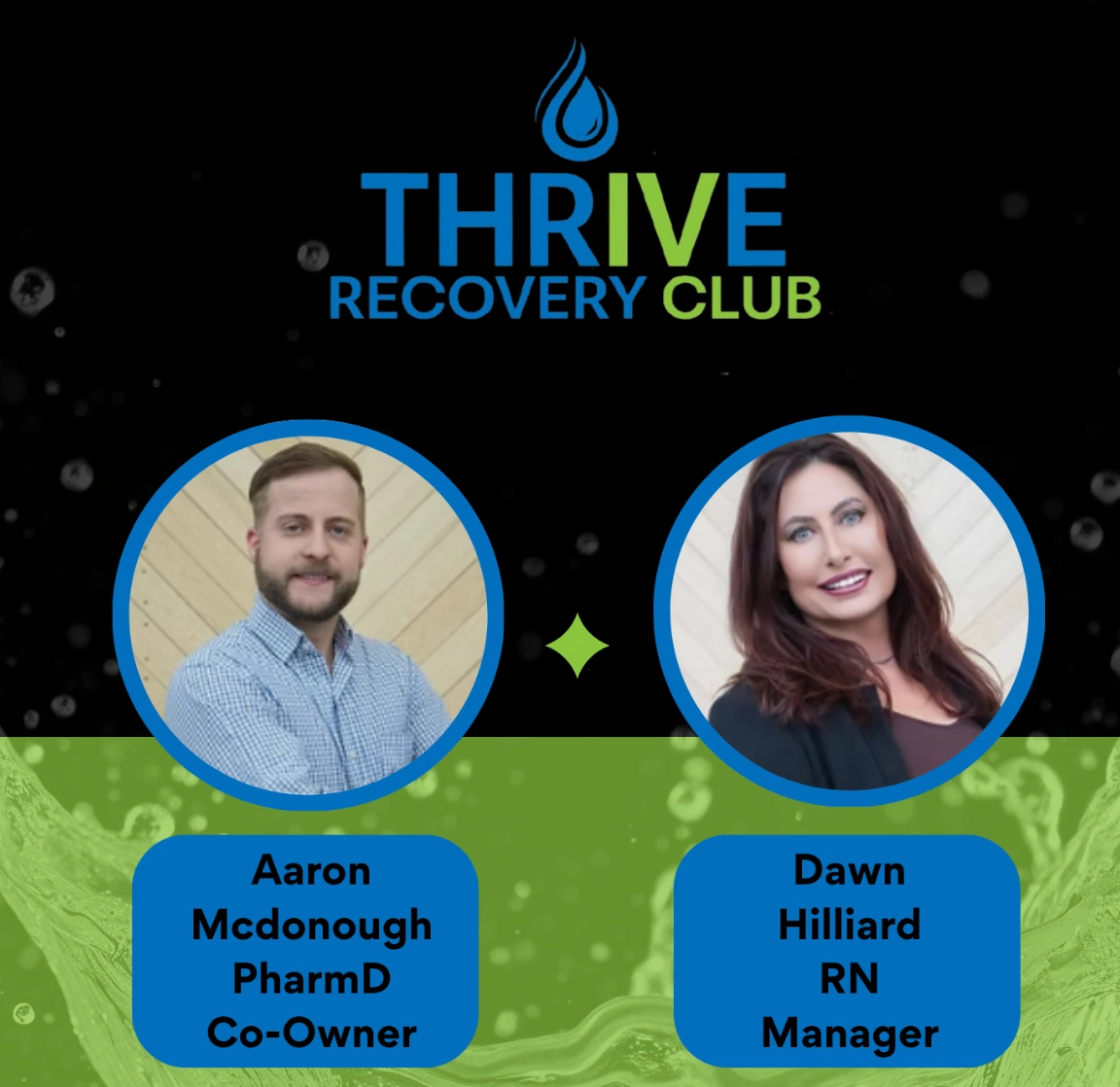
Aaron McDonough: So, uh my name is Aaron McDonough. I’m a pharmacist. I co-own Town Cresties, but we also co-own Thrive Recovery Club. Um the reason why or I guess my background into a lot of nutrition, hydration, inflammation is that I noticed as a pharmacist that a lot of people take a lot of prescription drugs. Um, and a lot of people don’t get terribly excited about taking more prescription drugs. Um, and what a lot of people don’t know and something that I learned actually after pharmacy school wasn’t taught to me in pharmacy school was a concept of drug induced nutrient depletion. Meaning a lot of prescription drugs that we might be taking can deplete several nutrients that are very important. And that really kind of led me into knowing more about nutritional status as it relates to biochemistry. And I won’t nerd out on you guys about biochemistry, but oftent times you have to get a whiteboard. I know you can. So, one thing that I always talk about is the KB cycle, which you guys may or may not probably not don’t know anything about, but the KB cycle is how your body produces energy. And when it produces energy, it also produces what we call free radicals. And so the analogy I always give is how your car has fuel. You put gasoline in it, you press down on the gas, it moves forward, it has energy. Well, what happens behind the car, it produces exhaust. And that’s what I kind of relate back to the body. When your body has the right nutrients in it, um, we think about B vitamins, we think about co-enzyme Q10. It produces energy through this carb cycle, but that also produces free radicals that can lead to inflammation. And so your body when it produces energy also produces exhaust like a car and that can lead to inflammation. And so these types of concepts just kept coming up and the biochemistry the nutritional biochemistry that I thought uh was really important and really interesting was not being talked too much about in the community. And so although that’s certainly a service that we offer at Town Crest where we you know look at medications and talk to them about nutrients that are important to be addressed uh we also wanted to expand into IV hydration because what we know uh as it relates to kinetics is that anything that is administered IV introvenously gets absorbed 100%. Um when we take stuff orally or by mouth it does have to go through your liver metabolism. So there is it is subject to less absorption but we still oftent times recommend oral supplements and we have them at Thrive. But the concept of doing IV hydration was so important to replenish the nutrients, replenish the antioxidants that can help fuel how your body is supposed to run efficiently and combat anti or free radicals to lower inflammation in our body. So, if you want to talk more about just Thrive, I guess your background, who you are, and Thrive and uh what we’re seeing every day there, we can start with that.
Dawn Hilliard: Yeah. Um my name is Dawn Hilliard. I manage Thrive Recovery Club. I have uh several years of nursing experience, management experience. Um so, solid medical background. Um I started uh putting everything together for Thrive in December and then we opened in February. And I I’ve always been interested in learning and studying um more so on what our bodies is made of, what we need to run, kind of fuel like a car. Um and there’s several options out there. There’s several, you know, our bodies are amazing and um it with the right things that can do amazing things. So um I jumped on board and Thrive Recovery Club and it’s been very exciting. You know, we see people every day more and more that’s wanting to be a part of their wellness and wanting to learn about it and you know it’s like we don’t cure but we can um help you feel better and find out why the question is why am I doing this or why do I feel like this and then provide basics you know for each person individually.
Natalie Johnston: So I think that for some people this is this concept of IV infusion is like oh yeah we knew we know about that we do it and then for others of us it might be wait what you can go to a place and you can pick an IV infusion for something and then you can get it. This is an odd kind of concept. So um I think for for those that maybe this is a new concept how Um, how common is this? Are are there lots of these places? Is this recognized in the medical field? Um, where does where does this concept stand in wellness?
Aaron McDonough: It’s a great question. Um, you will see these types of clinics around town, around the country, and definitely more populated and dense areas. But um I think the unique thing that brings our clinic a lot of value is the concept that we have nursing background. Uh our medical over or doctor director is an MD from Simler Orthopedic Clinic Fred Deerry. Um myself as a pharmacist we have a lot of unique educational backgrounds that sometimes these clinics don’t always have. Uh to open up just some background to open up a clinic that offers these services. there is no licensing. So, it’s not like we are a hospital or a medical clinic per se. Um, but what I say all the time is that we go above and beyond to act like we were being uh licensed or act like we are going to be overseen by a credentiing body because we want that to be a unique service that is not just taking advantage of the opportunity that doesn’t have to be credentials. We want people to know that it’s available, but it is something that we tr truly regulate ourselves as professionals. So to answer your question about you know how easy logistically speaking because we have that unique background nursing pharmacy medical doctor we are able to actually have standing orders where somebody can walk in off the streets and kind of pick all the cart from a menu saying that they want um XYZ infusion. And oftent times people don’t know exactly what they want because this is such a unique uh service. And so they’ll come in, talk to Dawn and say, “What is it that I want?” And then Dawn usually can curate a an infusion based off their unique needs. I don’t know if you would like to share an example of some types of uh examples of people who come in and they might not know what they want, but you’re able to identify maybe what their needs are.
Dawn Hilliard: Yeah. So basically start with why are you here? You know, what brought you here? Um how are you feeling? How would you like to feel better? You know, what is keeping you from today doing what you would really like to be doing? You know, to give you some, you know, extra energy. Are you not sleeping? Like everyone’s different. And that kind of plays a role in inflammation. When we talk about inflammation, like that’s the underlying key um to several things. Number one, pain. Um and but there’s a why thing. So, you know, while it’s not being noticed like It’s like even gut, you know, if you have inflammation, it affects your sleep, it affects your pain level, it affects you sleeping, it affect gut absorption. And that kind of reflects also with the IV um and how that works better because if you have chronic pain, inflammation, your gut is kind of at a reason where it’s not doing as well as it should. So, if you’re taking oral supplements or you’re eating, it’s not absorbing and processing those things like it should. So, you can help with an IV um because that’s going directly in your system. And so, we’re working on making all those systems better and providing um nutrients, providing um let’s say you’re not resting, there’s things magnesium, vitamin C. So, it’s like we can focus on the the individual keys of where you’re at in that process with inflammation and pain and try to find out, you know, where it’s coming from and why and start treating that and then get you on a program to hopefully overcome that whole inflammation process.
Natalie Johnston: So, let’s talk about what what is inflam inflammation, chronic inflammation, and um why do we care?
Aaron McDonough: Yeah. So let’s start by differentiating what acute inflammation is versus chronic inflammation. So acute inflammation is good. That’s your body’s response to an injury. You fall down, you scrape your knee, and then it becomes red, it comes inflamed. That’s your body’s acute reaction to heal yourself. Chronic inflammation is something that’s a little bit different. Um, usually we say it’s almost like a lowgrade inflammation that just kind of creepily increases for several years, could be decades. Um, and eventually it becomes something that is a a problem. And so, uh, this doesn’t have to be just muscularkeeletal inflammation as it relates to pain. Obviously, we’re talking about muscularkeeletal inflammation, but a term that isn’t as well accepted, but something I like to bring up a lot is meta inflammation, which is metabolic inflammation. And so that lowgrade inflammation over time is not just in your joint tissues. It’s not just in your connective tissues. It can be in your cardiovascular cardioabolic system that leads to diagnosises down the line of these cardtabolic conditions. Hypertension is an inflammatory condition. Uh even we can say diabetes is an inflammatory condition. Pain, arthritis is certainly an inflammatory condition. But these are kind of different things that are different from acute versus chronic inflammation. That meta inflammation, that chronic low-grade inflammation over time is something that can be addressed, but we have to figure out what’s causing it in the first place. And again, going back to what we always like to talk about is how does your body work on a biochemical level. Again, I won’t nerd out about biochemistry, but that’s how your body functions. It functions by going through these biochemical processes. And as a pharmacist, I know that the drugs that you take for inflammation or the drugs that you take for uh many conditions and diseases start um or or they they work on these biochemical endpoints. It might be an enzyme. Uh it usually is an enzyme, but it it’s all biochemistry. And so what we try to do is how do we address that biochemistry with a different input? And that input is typically nutrition or nutrients, whether IV, whether oral supplementation, it can be customized. But when we think about what’s causing that inflammation in the first place, it often times can start with as simple as poor absorption, poor diet, lack of activity, which is a huge thing and why it’s so important that um you know, we’re doing classes like yoga or we’re doing these small um small it doesn’t have because when people think about exercise oftent times they’re like all right, I got to go run a marathon or I got to go bench press 250 pounds. Nope. We don’t. That’s not what we need. We can do small things. And you know, something I always like to talk about is 40 to 60% heart rate max as a a good target for exercising. And that’s usually sometimes something like a heart rate of 60 beats per minute. 60 to 70 beats per minute as a good way to combat that lowgrade inflammation. And so I know we’re going I’m going on a tangent here, but that acute versus chronic inflammation, it’s a completely different thing. And there’s several different ways to combat it. And it doesn’t have to always be, you know, the prescription drugs that I always see as a pharmacist. It can be things like nutrition. It can be things like activity. Um, and that’s something that we definitely like to look at. And, you know, one thing that we have at Thrive that’s a really cool tool is our InBody composition scan. and it can actually look at how your water is shifting throughout your body, whether it’s inside of your cells or outside of your cells, and that will actually spit out a score of how inflamed your body is, whether you feel it or not. And that’s something that can be addressed.
Natalie Johnston: So, can you speak to that in the context of like heart disease, Parkinson’s, diabetes, type two?
Aaron McDonough: Um, yeah, absolutely. So, Um I can go on when we think of and some of these conditions are you know m a little more minor and some are very extensive very scary conditions um I’ll talk about autoimmunity too because that’s okay huge huge it’s on the rise um in the last 20 30 40 years we’re just skyrocketing and what the literature is supporting is a lot of this is actually coming from foods that we’re eating and the lack of activity that we have um there are several several different people who actually are trying to create even more literature on uh protocols that are focusing on nutrition and activity as opposed to the prescription drugs. So whenever you see a really cool ad on TV for a prescription drug, they are added or they are typically targeting inflammatory receptors or enzymes. So interlucans, TNF alpha, these are all drug targets uh for inflammation and all of these are typically for uh autoimmune conditions or just a condition that starts with the root cause being inflammation. So if you’re able to address what’s maybe causing that autoimmune reaction in the first place and typically it comes down to how our body’s detoxing which when we think about what is needed to detox our organ the liver is very important. Well, what fuels our liver? The mitochondria. Well, what fuels our mitochondria? Co-enzyme Q10, B vitamins, antioxidants like lepoic acid. All of these conditions. We can start with the condition and slowly work down to the biochemical processes, the enzymes, the inputs and then the nutritional preventative things that we can uh change in our life, modifiable risk factors, activity as well to actually change the course of that condition. But all of these conditions, most of them at least are modifiable. And that’s usually not accepted because people are thinking, “Oh, I got this condition or this diagnosis. I it stuck with me for life.” But it’s not always the case. We’re seeing more and more and more people are finding strategies, lifestyle modifications to actually modify that condition in the in the course of it. Does that answer that question?
Natalie Johnston: I I love how you said the conditions are modifiable. That’s a great way to describe it because we do tend to get stuck in our this is my diagnosis, this is my identity versus what can I do within my control right now. And that’s where you guys come in, right? So what if and I actually like that you broke it down step by step that way a little bit because that makes a little bit more sense even even to my brain to say, “Oh yeah, so then I come to you. I get maybe use some sort of infusion um packet that will help support and optimize the chemical uh soup that’s going on for my liver to do what it needs to do.
Aaron McDonough: Correct.
Natalie Johnston: I is that kind of
Aaron McDonough: Yeah. And I think one cool thing that uh Dawn has started to do is we realized that a lot of people are nutrient deficient, but it might be important to actually see exactly what you’re deficient in and how deficient you are in or you are. So, we started doing lab testing. And if you want to expound upon lab testing and how that can help us curate a uh a specific regimen.
Dawn Hilliard: Yeah, absolutely. So, um any lab is available to anyone that wants to the knowledge of, you know, where their levels are at. Um get some education, you know, education about me, what’s happening in my body, and where my levels are.
Natalie Johnston: When you say lab, what like what are you talking about?
Dawn Hilliard: So lab work like your baseline of where your nutrients are, your baseline of where you know your iron is any specific baseline of what your stable is. You know it’s like where our balance is. So you can see that and like versus like okay vitamin D vitamin D a lot of lack of vitamin D but how do I know I have a lack of vitamin D? Well, you know what? You can have a test easily. Um, and we do draw the labs right at Thrive, um, and send them off. But that not only tells you your baseline, but then you can also know and you can monitor what you’re doing. Is it improving those values?
Natalie Johnston: Um, what are what are some of the labs that we might be focusing on that give us important information?
Dawn Hilliard: Vitamin D for one, vitamin B. We do even have a glutathione that can get tested which is, you know, key to inflam inflammation.
Aaron McDonough: I think magnesium is a really cool one too because um if you were to get a standard magnesium blood draw um maybe at your annual clinic visit, they’re actually testing serum magnesium, which basically means just the magnesium that’s free flowing in your blood. Well, magnesium is required for your heart to pump. And so if you were completely depleted in magnesium just in your serum, you wouldn’t be alive. If your magnesium needs it or your heart needs it to pump, your pump or your heart pumps to keep you alive. So if you get that level checked and you think that’s your magnesium level, that’s only telling you how much is in your blood to use in your organs like your heart. But there’s RBC, red blood cell, which intracellular magnesium levels which is actually when we think about going back to that nerding out on the biochemistry all those reactions are occurring within the cell. So the nutrient needs to get into the cell to work as it should and so that’s different from outside of the cell or in the serum. So that magnesium that we would draw actually shows you the red blood cell the magnesium intracellularly that would be different from what you might normally get um at an annual wellness visit. So there’s difference in the types of labs too. Um with vitamin D there’s actually different types of um vitamin D labs that tell you different information. So it’s a complex field and I think you know the direct to consumer or the ease of access to it um is something that’s unique and cool but also sometimes taken advantage of by people who might not know that full picture. I think that’s another you know very good benefit that we provide is you’re not just going to walk in and say I think magnesium or I’m magnesium deficient can you check it and then we check the wrong one. You’re going to come in and we’re going to be like, “This is what you need to get checked. This is why you need to have this form checked and this is the the nutritional regimen, IV hydration therapy that we would recommend and maybe the maintenance oral supplementation all in their right forms that are actually going to do something for you. And that I think is a differentiating factor comparing us to maybe some other clinics that might not have all that insight.
Natalie Johnston: So is this lab work different than when you go to your primary care doctor or
Aaron McDonough: it can be it can be um you know that magnesium example a very primary or a very common one. We’re seeing a lot of people come and they just have their serum magnesium checked and it’s different from the red blood cell magnesium. But then there’s labs that um are just not as common to get checked uh maybe at your annual wellness visit. One thing that I always like to check uh is a fasting insulin level. And some people are like fasting insulin, what’s what is that? Well, that can actually show us maybe even years in advance if you are at increased risk of insulin resistance, which again is a pro-inflammatory biochemical process. And so that is a common lab that is not really looked at.
Natalie Johnston: How does that differ from an A1C? is more probably familiar.
Aaron McDonough: So, an A1C would be a a kind of a snapshot of a 90day period of what your blood glucose looks like. And it usually gives you a percentage. Sometimes it’s between four and 15%. Um, and you typically want it uh depending on if you have a diagnosis, but we’re looking at typically 6% or below as a as a target. Um, but what a fasting insulin would show you because you could have a normal A1C in a fasting insulin that’s elevated. That’s telling us that maybe in five or 10 years if you don’t get this inflammation addressed. This is that lowgrade meta inflammation. If you don’t get this addressed, you could be at an increased risk of having that A1C elevated 5, 10 years from now. And so that’s an example of a lab that you probably wouldn’t normally see at an annual wellness check. Um, but something that’s unique that we can draw for you to show you, hey, you might have normal labs now, but this one stood out and it’s showing that if this is not addressed through activity, through diet, through nutrition, through hydration, through vitamin status, then you could in the future have a diagnosis that you don’t want. And so again, it’s also modifiable. That diagnosis in the future is also modifiable. But when we say modifiable, it’s a lot easier to modify it if you’re ahead of time and knowing that you are at an increased risk of it as opposed to waiting and then 10 years you get that diagnosed, then you have to modify even harder.
Natalie Johnston: So if you already have an elevated A1C, how does would the IV therapy um potentially help with that?
Aaron McDonough: Yeah. Yeah. So when what we would not do is give you a a drug that would infuse that would be infused that would lower your A1C dramatically. That’s not kind of the the goal here is to give you some like quick band-aid that you have to keep coming back for to uh like a drug infusion that you would see people, you know, having to go to a a clinic for. Ours would be a nutritional plan. And so that nutritional plan slowly addresses why that A1C is elevated in the first place. And so some things that we might look into, well, magnesium is a great example. Your blood glucose and your insulin need magnesium to get that glucose to go inside the cell. Why do you want glucose to go inside the cell? Energy. That’s how you If you don’t use your glucose as energy, it can get stored into as fat. And that’s not a good too and that creates also inflammation and so yeah it’s not something where you go oh I have elevated A1C can you give me this infusion and then tomorrow my A1C is normal no but it is something where we can customize a plan for you that would be able to slowly get that um A1C or that blood sugar to where we want it to be
Dawn Hilliard: and I think that kind of goes along with the inflammation process like the typical A1C like okay why is it high you know because we want to address you know the reason that it’s high and look for the reason um and that’s you know the first step with the inflammation process as well
Aaron McDonough: one thing uh that we often times look at is an omega index too um omegas like fish oil for example um are commonly depleted in western civilization or like countries counts like America. Uh if you look at our omega indexes compared to Asian countries, we’re seeing dramatically different in their omega status. And it’s usually because of our consumption of healthy polyunsaturated fatty acids or fish. And uh because of that, our risk of cardioabolic diseases, heart disease, etc. is dramatically elevated as well. And so what we can do is actually do a finger prick to show you what your omega index is and then create a recommendation based off of that too. So it’s multiaceted. It’s usually not just hey your A1C is elevated. You need this one treatment. This one treatment is going to fix everything. It’s looking at your yourself, your whole body holistically and saying this is the plan. This is step one. This is step two. step three uh that we can do to help your whole body, inflammation, etc. get to where it wants to be,
Natalie Johnston: which is a reflection of how we’re built too from a cellular level and a system level. One thing doesn’t cause one other thing, right? There each um our whole body is affected on a number of different levels. Um and a number of different systems are affected and that’s why this multimodal approach to pain or biocschosocial approach to pain or whether we’re talking pain or we’re talking inflammation it has to come we have to come at it from multiple different angles in order to optimize our success. So, um, yeah, and I think that’s what what you’re getting at.
Aaron McDonough: And you kind of alluded to the fact that every single one of us might have a different concern, condition, diagnosis, whatever it may be that we’re dealing with that’s different from the other person. Coincidentally, a lot of times that root cause might actually be something that’s very similar. Um, so I’ll talk about thyroid status, too, because I I I feel like we deal with that a lot. Um, people oftentimes don’t know is how your thyroid uh produces uh the active thyroid or the inactive thyroid T4 and then convert it to T3. From a nutritional level, you need iodine and iron to actually produce T4 and that’s the inactive form of thyroid. And actually to get T4 converted to T3 because if you don’t convert it, it’s just inactive in your body, you need selenium and zinc. And these are common infusions that we’re doing a lot. And you might, it’s not like we call it the thyroid mix or anything like that. Maybe we should. Maybe we should FDA might not like that one, but but uh these are things that we understand the biochemistry of it that well, you need to convert and and these are also lab tests that we could look at. Um your, you know, T4 is here, your T3 is here, one’s high, one’s low. This is what’s happening. you’re not converting it. Well, these are the nutrients needed to produce and then convert those types of things. That type of scenario is kind of repeated based off of what that condition, diagnosis, or thing is that we’re all dealing with. And so, although it although it’s different, it sometimes isn’t the root cause of it can be addressed if we actually just kind of replete those nutrients. I think activity is such an important thing too that uh I I we haven’t talked too much about but we are a very sedentary country and that’s just beencome becoming more and more of a problem. Uh recently I actually invested in a ring and uh just seeing the amount of steps that I take on a regular basis. Um, sometimes I’m a little bit more sedentary working at my desk and it’s concerning if I’m, you know, under 10,000 steps a day. And I remember that always being a recommendation, getting 10,000 or more steps a day. It’s also can be very challenging to get 10,000 steps a day if we’re not being uh intentional about getting that. But activity levels, too. And again, not saying it has to be a marathon run or, you know, spending hours at the gym pumping iron, walking. I think more and more we can walk, more and more we can lower that inflammation. We then pair that with addressing nutritional status, we are really combating inflammation and therefore combating those conditions that we’re dealing with.
Natalie Johnston: You know, what about those of us who do make it a priority to eat healthy? We try to get a lot of nutrients through natural, you know, the food. I shouldn’t say natural because our culture is lacking a lot of that unless we’re picking it from our garden, but um how does that way of getting nutrients into our body differ from IV nutrients?
Aaron McDonough: Yeah. So, obviously eating healthy is the most important thing to do. Um some of us might have conditions where we have less absorption than the other. So whenever we eat something it goes down into our stomach. Then our stomach has to process it. It goes into our small intestine. Small intestine delivers nutrients to the organs needed. Uh which is a whole crazy process. But what people don’t know is um that process sometimes is acid dependent. And what that means is uh one we take acid reducing medications a lot in this country. So an example of that would be like omerazol or kylok or pentoresol ordine. Um and this concept of we just stop producing as much acid as we age too. A lot of those nutrients when we’re eating them from food are need to be subjected to acid to get absorbed into the small intestine. Not to say that by eating a healthy diet you’re not going to be successful of getting absorption. It just means that one meal is not going to cover it. Two meals is not going to cover. It needs to be that complete lifestyle change. But uh and all of us might have a different level of absorption. The only way really to find out what we might be deficient in is lab testing. Uh so I think that’s why it’s important too. Um most people that come to us, they they have a health concern. So they have a symptom and that symptom they’re trying to figure out why it’s happening. And that’s why we work to labs defines um really what’s going on. Why is that A1C elevated? Why do you feel fatigued? Why uh do you not sleep well at night? Well, oftentimes to figure out that why, we might have to do some objective dig digging and finding a lab test. And then when we find that lab test, we can then create that custom infusion, that custom regimen to go hand inand with that healthy eating. But just knowing that we’re all different. What I absorb by eating a nutrient-dense meal might be different from what you absorb and your friends and your family. And that might be dependent on my genetics. That might be dependent on the prescriptions that I take. That might be dependent on just how much acid I have in my my body because of my age. There’s a lot of things that change that. And uh really the only way to find out is sometimes lab testing, but it does not replace eating healthy. We always want to eat healthy.
Natalie Johnston: And your stress levels will impact all of them.
Aaron McDonough: Correct. Yeah. Yeah.
Dawn Hilliard: Well, and I think you know the whole thing of one thing leads to another you know like we talked about you know more sleep. You get more sleep. Um that’s going to help with the process and metabolization of things and the absorption of things. Um that’s also going to help increase your energy. So you know increase of energy is like it’s a circle. It’s a circle. So, you know, you want to focus on each of those pieces along with the nutritional value to help everything work together.
Natalie Johnston: Yeah. Other questions?
Dawn Hilliard: I mean, didn’t mention we also um have cold, we have saunas, infrared saunas, and cold punch tubs, which is great for inflam inflammation. Um, infrared helps the body with healing. um inflammation and and the cold punches as well. So that’s something that you can add in the process.
Aaron McDonough: The one thing about infrared that I’ll talk about that’s different from a steam sauna um is one of them is just elevating the temperature around us and we are sweating. Now sweating is great because that’s a way of bot transformation which is how your body and your liver actually detox out toxins that it might have in it. But you actually uh when you use infrared sauna that actually penetrates because they’re different wavelengths that actually penetrates into the organs and can actually detox from within. So the difference between a steam sauna and an infrared sauna is one creates the ambient temperature to be elevated and because of that you sweat and the actual uh infrared sauna increases your internal temperature of your body and makes your body detox from within. So there there are differences in even the saunas that we use. And so understanding those things and the different wavelengths too, the near infrared versus far infrared versus mid- infrared, they have different benefits from skin health to actual liver detoxification. And so understanding those differences, there’s a lot of information to be able to unpack and to know about. Um, and I think again coming back to that’s what the value is that we try to provide the community is not just saying, “Hey, we’ve got these cool things that we know are fads right now like saunas and IVs,” but we really understand how they work. We understand how they work with you on the biochemical level, on the nutritional level, on the evidence-based science level. And we want you to understand it. We don’t want you just to do an IV infusion or a sauna because we said it was cool or your friend said it was a good idea. We want you to know what’s actually doing inside your body to feel to make you feel the way that you want to feel
Dawn Hilliard: and then again, you know, have the labs so you can actually see too. You know, you want to know if this is helping and where it’s helping.
Natalie Johnston: So, I appreciate the attention to detail and evidence um in in what you guys are explaining and what you offer because maybe the common Maybe the general public has no interest in all those details, but I think there’s definitely a few of us that do and and we want to know, okay, wait, what what is behind the scenes? And um you know, maybe not to the level of a white board, but so thinking about tying it all together a little bit, at what point then is somebody done with IV infusions or is it do do you see people come and go intermittently throughout the year? Is it kind of a ongoing thing? How does that work?
Dawn Hilliard: Well, I think it’s different for everyone. Um, it’s important to know what your body’s telling you on how you’re feeling. And then also once you get to a level where you are kind of maintenance is good, just like you know, we get our car oil changed. So, it’s always good because our levels we’re always using them, you know, so it’s always nice to keep a um average level, keep the maintenance going, and then you can monitor as you go. Let’s say, you know, then you you know, your immune system is a little bit weak. You’re being exposed to things. Um you’re feeling some inflammation. Um then it’s time maybe, you know, let’s do a IV again. Um in between the oral supplements and things you’re doing because you don’t want to get back to where you’re building and building and building up inflammation and you know, it’s harder to control.
Natalie Johnston: Do you guys work directly with functional medicine doctors, primary care physicians? Um what does that look like the communication work?
Dawn Hilliard: So um functional medicine a lot because to um with the IV you know it goes in so they’re seeing a lot of the chronic gut disorders where the oral supplements aren’t working or aren’t being metabolized. Um so they’re recommending IV infusions. um vitamin C it’s all over the countries like you know that’s our powerhouse for many of our body processes and you know everyone is always told that you know you just excrete what the extra however your cell is still absorbing all that so you’re kind of giving your cells like an extra bolus a wash and they’re absorbing so it’s kind of like you know they’re getting a huge cleanse within the
Natalie Johnston: Yes, they’re going to you’re going to discrete it and get rid of it, but you’ve just supplied a powerhouse, you know, to those cells. Um, which as far as inflammation and healing, um, they’ve decided, you know, it’s it’s pretty that’s simple and it’s easy, you know, something to do.
Dawn Hilliard: Low risk, low risk, very low risk and, you know, great for many of your body processes. So, we get um that iron. We do um iron infusions um which your iron levels can be a range of this. So a lot of people with chronic fatigue, you know, that’s another thing, you know, you would question, not just thyroid, but you might be on a lower end. You know, you go get to the physician and they’ll be like, “Your iron levels are good.” Well, they might be good, but they’re all the way down here and you’re tired. So, we can make them better. Um and again by labs you know so we do get a lot of iron patients because it’s very hard the process to get iron. You cannot get iron unless you’re diagnosed to be depleted.
Natalie Johnston: Um do you feel like the um so probably my guess is the functional medicine doctors are a little bit more open to communication back and forth um because they’re already thinking out of the box and what do you get some some push back from the more traditional um model of care physicians or how was that communication back and forth?
Aaron McDonough: So what I would say is um you know a prime example that Dawn mentioned with the iron infusions I think it’s such a cool service that we’re offering and getting a lot of referrals from the functional medicine providers because if that patient were to schedule a a um IV infusion um at a health system a local health system they’ve actually been told that they’re six to nine months out and that the infusion would actually build their insurance like five times the price that we would actually charge them. So they is very unique that the provider is like, “Well, you’re saying I could get an infusion this weekend when my patient was told that it’s going to be six to nine months away and the cost is actually going to be cheaper and they don’t have to do a full day visit at the hospital and like yeah.” So that aspect working with those local providers, clinics, etc. They get really excited about that. Um there’s always going to be push back. Um no matter what uh no matter what field we are in, someone’s always going to have a different something different than the norm, but we need more people to do different things to be healthier.
Dawn Hilliard: Yes. And I find it very important, too. Um, like, you know, we not we aren’t curing. We don’t want to take away the care that you’re getting from your provider. We want to work with them. We want you to follow up with the provider and share what we’re doing. Um, because again, it’s all a process and that’s how it should be. And for the most part, I think If you someone is really concerned about your health, they are going to be open to all of those options for you.
Aaron McDonough: We’ve created a lot of policies to make sure that it’s in your safest and best interest. Someone’s not going to walk in off the streets and get a full blast of iron infused into them without us knowing what uh their iron levels are and then communicating that with their provider. So, uh there’s some things that um are less risky like B vitamins. You can walk in off the street and get some B vitamins from us because if your body uses what it uses and needs, it will excrete the rest through the urine being a water soluble vitamin. Iron on the other hand, yeah, we probably want to get labs checked first.
Natalie Johnston: Now, the B vitamins, that’s an interesting one because let’s say we have somebody who um is above 50 or maybe 60 70 getting some neuropathy or these numbness and tingling kind of things and red flags have been ruled out. Okay. So, we’re not concerned about an emergency situation, but that might be an example where somebody could come in and get a B vitamin infusion and see if that changes.
Dawn Hilliard: Vitamins are very beneficial symptoms, right?
Aaron McDonough: Neuropathy. Yeah. Um the way your nerves work is they have a protective cushioning layer called myelin. And what fuels the myelin are B vitamins. Your B vitamins, specifically B12 um and folic acid B6 can be very beneficial to actually fixing that root cause, restoring the integrity of the myelin sheep. And uh B vitamins even in traditional medicine world would be recognized as a modality for treating even neuropathy. And so that one would be one that is less even you know radical or new uh thought process that only functional medicine or or new age providers would be thinking about. Even a traditional provider would say yes B vitamins is going to be something that’s been proven to be very beneficial for neuropathy symptoms. So, one IV infusion for sure would give you that quick boost of uh IV vitamins that you would need, but we also have uh oral supplementations that are beneficial to kind of reduce the need of or frequency of the IVs. And so instead of having to do a weekly IV, perhaps it’s bi-weekly or even monthly and in between you use a methylated B vitamin uh complex vitamin oral supplementation. Uh methylation that’s a whole another process that we’ll talk about there.
Natalie Johnston: We better not for the sake of time.
Dawn Hilliard: But the B12 B12 is not B12. And you can get B12 injections. Let’s say, you know, you’re in a hurry. Um, you know, they’re cheaper. It’s quick an injection. And again, that would be great to see, you know, let’s just see if it works and how, you know, yeah, what it’s working for.
Natalie Johnston: Okay. Sometimes people take multivitamins and things like that and then you hear doctors say, well, you’re wasting your money.
Aaron McDonough: Sure. Yeah. I think there’s a lot of legitimacy to that statement because uh multivitamins and vitamins in general are not actually FDA approved. Now, what do I say that means that you shouldn’t take vitamins? No, absolutely not. But that does mean that you should work with a trusted resource to finding a multivitamin uh that actually has the nutrients in a more absorbable way. So, I won’t talk too much about methylation, but B12 in most vitamins is provided cyanocobalamin uh which you need a specialized enzyme called methyl tetrahydropholic reductance.
Natalie Johnston: You did not just say that out loud, did you?
Aaron McDonough: Or MTHFR three times in a row that converts it to its active form. And a lot of people actually have a genetic myself I’ve been tested for this. 50% of the population have a genetic mutation that cannot convert that to its active form. So that would mean you take it, it’s not going to do anything for you. If you have neuropathy and you take cyanobin and you have that gene mutation, it is not going to do anything for you because you need it to be absorbed in its active form. And so that’s when we say, well, let’s bypass that inactive form. Let’s give you the activated form and that’s called methylcobalamin. So that’s just one example of one nutrient in a multivitamin. We could talk about every last nutrient in a multivitamin and tell you this is what you should take. This is what you might want to avoid.
Natalie Johnston: And these are things that you can look at in your lab work, all the things that you just talked about.
Aaron McDonough: Yes. Yeah.
Natalie Johnston: Okay. Do you report to providers when someone comes and you send that information on or you like the lab test lab results?
Dawn Hilliard: Yes. Yeah. Yeah. If if that’s something
Natalie Johnston: the treatment that you provide. um or does the person himself or herself have to go and tell?
Dawn Hilliard: We will do either or. So I typically um if the provider a lot of times a provider will reach out to me and let them know that hey I have this client we have a referral form that they um fill out and um I just keep an open communication with them. you know, they usually provide a reference. Um, they will even provide me with the labs that they have. Um, we just share the information back and forth. I put the information I have in your chart and the information they give me in your chart and then follow up with them and share the same thing. So, everyone has that communication again, you know, because that’s important for your provider.
Natalie Johnston: Do you do longitudinal studies on your patients too to keep track of how they’re going and what benefits they’re experiencing?
Dawn Hilliard: Yeah, I would say like a a true study like that would that would cost a lot of money and you can’t you know I follow up but the they have to share with me so you know I’ll reach out and follow up with you and if you keep that communication open we do.
Aaron McDonough: Yeah.
Dawn Hilliard: So it just depends on the person and how much they’re wanting to follow up and follow through and communicate.
Natalie Johnston: Yeah. And do you have does some insurance companies cover patients coming to you?
Aaron McDonough: See, that’s the challenging part. Um being a non recognizable clinic by the insurance world, it is a cash pay um service. But that being said is we we really try to make them as affordable um as possible. And you know, oftentimes what some people do forget is if you went to the health system, build your insurance, and got an infusion or whatever, XYZ, yes, you do have that luxury of being able to say you build insurance. Does that mean you have $0 co-pay? No. That might mean in a month or two you get a nice surprise bill saying you owe a couple hundred dollars. And so what we try to do is, yes, it is not covered by insurance, but we try to make it than maybe what a co-ay would be um if you were to have that assessed right by the insurance company.
Natalie Johnston: I think a different way to look at it though too is the benefits. If we use your fasting insulin test as an example, um, and the cost of diabetes type two over the course of 20 years, um, that cost is going to be far greater than your cost of getting a lab test and addressing it early on. Um, but that requires some forward thinking. And you know, it’s like, well, if I pay for my health, even if it’s now cashbased, it’s going to be better than if I’m paying for my sickness with all the drugs that are necessary and the visits here, here, and here, and the tests that are going to be necessary when I am sick. Um, but that’s hard for people to understand when they’re healthy, too. And and and that’s where I say it requires some forethought, I think. But um you know that’s that’s why we pay for a gym membership. That’s why we pay for um other things that we choose to stay healthy and this is just a different way to kind of think about our health. Um and in the long run it might preventive it’s preventive soant. So um but that does require some prior re reprioritization and reframing of health as preventative versus reactive. Um which our culture is one of a very reactive treated disease uh medical model versus the preventive lifestyle medicine model that lots of us are trying to um incorporate more of.
Aaron McDonough: Yeah, I would say the you know one of the biomedical model is you know almost like a quick fix but that quick fix is a drug typically and that one drug can lead to side effects and require another drug and then another drug is needed. We call this polyfarm pharmacy. This preventative model is a lifelong commitment is what we kind of say a lot of times. But it is something that if we commit to maybe have a investment. It’s not always going to say not always a financial investment but even a time investment too because we want you to do all the things. Go to yoga, exercise, eat healthy, maybe get an infusion every so often. There is an investment level there. um by doing that long term you there’s usually maybe cost savings but also quality of life savings as well which I think is even more important than cost savings. Uh I what I hate to see is people aging in a way that maybe their number because I think age is just a number. So if we’re 70 years old or 80s years old, we can either feel like that age or we could even feel like we’re 90 or 100 or we could feel like we’re 60. And so we again all modifiable. Age is a number. There’s metabolic age, there’s biological age. How we can feel does not have to be reflective of the number that we might be associating with. If you ever see us make an ad saying, “All you need is this.” Run the other way.
Natalie Johnston: Yeah. Run the other way.
Aaron McDonough: There’s no such thing as all you need is. There’s no quick easy fix. It’s a comprehensive approach, a commitment to a lot of different things. And uh if I make an ad that says, “Hey, I’ll do all these different things.” And yeah, maybe you can listen to that.
Natalie Johnston: But well, I I think that’s a good place to kind of wrap things up. I feel like we could go on for a long time um with a lot of questions, but I I really felt like I learned a little bit more about the science and the specificity that goes into the Thrive Recovery Club, and I appreciate that, and I think that our listeners will also appreciate that. Um so, thank you guys so much for your time.